Archive for the ‘attention’ Category

It always ends with YouTube - Extremes of Entertainment

Friday, October 26th, 2007


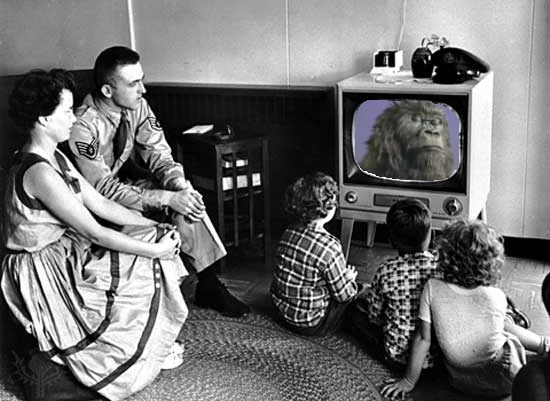
Over the past months I’ve noticed that all social gatherings now end with people huddled around a computer looking at YouTube videos. (And no, not only geek gatherings!) References to funny or interesting things will stack up in conversation throughout the night until someone just can’t take it anymore and pulls out the laptop. As the first video is run, a crowd gathers round, and the crowd attracts others until the whole party is circled round. When the video is finished, people will request other videos, calling out search queries like magical incantations: “ikea lamp!” “chuck e cheese booty!” “buffalo lion alligator!” “will it blend ipod!” “phil collins gorilla!” “my hands are bananas!” and “FUCKING AWESOME!”

Any one of these videos would have rocked my world just 10 years ago. Most of the videos that get sent to me daily are far better than what was on America’s Funniest Home Video.

I’ve been thinking lately about how damn entertaining all of this is, and what it means for us as a culture. Like many of you, my savvy readers, the bar has been raised really high for what counts as entertaining these days.

Our filters and funnels for content have gotten really really good. (Even though they certainly can be made better.) Mass filters like Digg and TechMeme use thousands of people to sort out what is really interesting. My friends around the world IM me links, often mere minutes after someone has IM’ed the link to them. The internet has made the attention market very efficient.

I’m mostly happy about this, and of course am entertained.  But it seems that when you were forced to endure mediocre content (like old network TV or magazine articles), you appreciated the gems more when they came along. A bowl of rice tastes better to a starving man than the most expensive French dinner eaten by an urban foodie.

Will future generations take good entertainment and interestingness for granted as much as we now take good food for granted? (Or am I just becoming a curmudgeon?)

Facebook vs. the Attention Economy: Where are the Stars?

Friday, July 20th, 2007

TechCrunch is asking Could Facebook Become The Next Microsoft?. This echoes the thoughts of myself and others from a month ago.

But since then I’ve been wondering: Where are the Facebook stars?

Only your direct friends and members of your “networks” can see the content you create. Only these people can pay attention to what you do in Facebook.

As a result:

  • There are no bands giving out their Facebook URLs like they do for MySpace.
  • There are no products in Facebook that you can “befriend”.
  • There are no movie stars in Facebook that you can follow.
  • There are no popular bloggers in Facebook that everyone reads.
  • There are no stars in Facebook.

Even though I would like to open my profile to visible by anyone, this is simply not possible. Here are the three settings available for my profile:

There is no way to get rich in Facebook’s attention economy.

One datapoint: My friend Fabian in Germany says that he’s tried Facebook but gets quickly bored because he can’t see any profiles. The German Facebook clone Studivz.com defaults all profiles to being publicly viewable. (They also have a built-in MyBlogLog-esque feature where you can see who has been viewing your profile.)

Bottom line: Attention is the new wealth, but in Facebook everyone has a glass ceiling.


Related:

Chart of Global Information and Attention

Thursday, July 19th, 2007

Last Fall working on my thesis I made some sketches trying to tie together thoughts on attention, influence, information, and the internet. This is one of my favorites. (Click to enlarge)


See also:

Does Paris have too much attention?

Tuesday, July 17th, 2007

Paris Hilton is like a present day Greek goddess. No no no, I don’t mean it like that!

I thought of this while reading the excellent post by Paul Salamone about Social Justice in the Attention Economy. His argument: If attention is the new wealth, should we attempt to redistribute it equally? (Goldhaber responds, and Paul responds again.)

Both take it for granted that Paris Hilton is a classic case of someone getting more attention than they deserve.

I won’t argue that she deserves more or less attention. But the contrarian part of me wonders if she and other “attention epicenters” don’t play a useful and age-old role in society.

The basis of language, of society, of culture, is a shared set of stories and figures. For example, in Roman times disparate cultures within the empire had some basic unity with their common set of gods. Conquered nations would often map their local gods onto Roman gods. This common framework allowed for discourse and understanding across cultures. If someone said “This guy is as strong as Zeus” or “You are working like Sisyphus” you knew what they meant.

Biblical characters have played a similar role in most western culture for the past 1500 years. But religion’s influence is lessening, and globalization is bringing together disparate cultures without this common tradition. If you want to tell a story that will be understood by people across generations and across cultures, you don’t have much common ground to start from.

You can see where I’m going with this.

Paris Hilton represents wealth, exposure, decadence and ditzy-ness. Bin Laden represents terrorism and religious extremism. Donald Trump represents capitalism, wealth, corporate success. And so it goes. These people have become ideals. They have become our modern day equivalent of greek gods and goddessse. They are gods that can be invoked to tell your story across cultural and subcultural gabs. Just like the stories Paul and Goldhaber are telling in their essays.

That’s why my partner Todd got a laugh out of this slide in his VC presentation of Lijit:


So is Paris going to unite the world and usher in an era of world peace? Okay, probably not.

More from my blog:

Other related reading:

Digg Effects, Neurons and your Personal Blogging Threshold

Monday, June 11th, 2007

First, I’d like to welcome the new readers who found wanderingstan this weekend via the posts on TUAW, Gizmodo, and others!

For those of you just joining the story: Last Thursday I posted a picture taken by Gwen Bell of her house-mates baked MacBook. As soon as Paul showed the photo I knew it had potential to go viral.

And so it did. The TUAW version of the story was Dugg (1828 so far), and I’ve had almost 15000 reads of that post.

This got me thinking: The web is beginning to operate very much the way our brain does. This is especially visible in the case of Digg.

You see, every neuron has a firing threshold. It has inputs from many other neurons, and when enough of those incoming neurons fire, the cumulative effect may be enough to cause it to fire.

Each digg story operates the same way. Each digg is a input activation for the story. When enough activation occurs within a short time period, the firing threshold is crossed: the story moves to the front page. (Note that the exact value of this threshold is a secret which Kevin Rose isn’t telling!) This “front page firing” causes activation of millions of readers.

Here’s a typical response chart for a neuron, and the physical structures responsible.

So what would this look like in Digg/Web-land? Here’s my take:

To stretch this analog further: Some of those readers will love the story so much that they then blob about it. In other words, the reader’s Personal Blogging Threshold™ was crossed, just like the firing threshold of the neuron. I suppose you could say twitter is the correct outlet for people with low PBT’s. :)

And how else can I end a post like this than with a “Digg This” button? Here you go!

Social Media and Advertising

Thursday, June 7th, 2007

It used to be that there were and handful of media outlets. We the poor masses were expected passively ingest their content. Our only “interaction” was to choose which media source to turn our attention to. Tonight is it NBC or CBS or ABC?

Part of their output streams came from advertisers. We were also expected to passively ingest these parts.

But now there’s been a change, right? Web 2.0 and all that user generated content stuff. But so far it’s only been in the first part, the content. what about the ads? We’re still expected to pay attention to any old crap that “they” want us to see or hear. (Or smell, in the case of many magazines!)

Google innovated by giving us more targeted but less annoying ads, but we still have no say in the matter.

Fred’s post today about favoriting ads got me thinking about it again. David Henderson and I talked about this when Digg ran a story on Digging Advertisements.

We now have ads created by users, which is a good start. But if we’re going to have this stuff in our face, we need have more choice about what’s going to be there.

I’m not sure what this will look like. I’m sure in will involve the phenomena of people endorsing ads, like when they friend the XBox user in MySpace. (As first pointed out to me.)

The value of my attention is rising, and I’m not going to give it to just anyone who pays a publisher!

Project: What is Stan watching right now?

Monday, June 4th, 2007

I’ve written before about the transition from blogging to microblogging to implicit blogging. My clickstream is my implicit blog. In other words, the answer to the question “What is Stan doing right now?” is best answered by the URL I am currently viewing.

So…I had to build it. Here’s what it looks like:


Click the image about to try it, or go to http://wanderingstan.com/live_attention/index.html.

Spurred by a brainstorm session with Jonas Goldstein, I emailed Cluztr founder Jon about how a little javascript could allow anyone to follow an attentionstream with needing a download. So he whipped up a new JSON API, and I had no choice but to build it. (Thanks again, Jon!)

Disclaimers: It’s still kinda flakey. Some sites will break out of the frameset. I’m working on some ways around this.

This is one piece of my blog overhaul where I want to bring some order to all my attention streams, both incoming and outgoing. Hope to have this up soon.

So give this a whirl, let me know of any problems.

I’m online and surfing most days between 9 and 6 mountain standard time. :)

ps- Any recommendations for a good thumbnail service?

This conversation is being recorded - Trying out TapeFailure

Thursday, May 17th, 2007

Well, at least it’s supposed to be recorded.

Last month I wrote a post about tapefailure, a new web analytics company that records everything a user does on your site. Down to every movement of the mouse.

They officially launched yesterday and I installed it here on wanderingstan.com. First impressions are that it looks great and very slick, but the fidelity of the recording seems shakey at times. They may still be working out bugs.

To see what a visit recording looks like, click the tape below. (Since they used the tape analogy, this is only fitting!)

It’s the “best” recording I’ve gotten so far, which isn’t saying much. But you can imagine how cool (and interesting and scary) this will be when it’s fully working.

How can I be excited about this and be infuriated at (for example) ComCast or Google recording much corser bits of personal data? Damn. There’s a real tension there which I’ll have to work out in another post.

What to do with too much money? Or too much attention?

Tuesday, April 24th, 2007


“Money does a really strange thing. It gives you this sense of omnipotence. But eventually you’re just one person, you look around at all this stuff you’ve acquired and you wonder how you’re ever going to use it.”

That quote is by John McAfee, from an article detailing the 20 million dollar home that he is selling.

This recalled the quote by Goldhaber about the how money is losing it’s appeal as the ultimate must-have item.

You might want to eat all the food in a well-stocked refrigerator at one sitting, but you would probably burst. For the same basic reason — your having only one body, and that of limited size — you can only sleep in so many beds in a night or a lifetime, wear so many clothes, or visit so many spots. But if you were able to get all the world’s attention, it would not cause you any irect bodily harm.

Would you rather have a million dollars, or a million people pay attention to you? Maybe they read your blog, have read your book, watch you on TV, or follow your clickstream. (Ignoring the problem of when the attention lavished on you is out of your control, as it is with celebrities.)

What is the exchange rate between dollars and attention?

tapefailure: Whatever you’re looking at is looking at you…even closer.

Friday, April 6th, 2007

What if a site could record all the behavior of its visitors? I wrote about this a few weeks ago with my about a little hack to record all the text selections that are made here on wanderingstan.com. (It’s still recording, as you can see.)

Well, as is so often the case online, someone has already done it. Yesterday I learned about tapefailure.com.

Tapefailure lets you record your users’ browsing sessions and play them back, just like a tape, as well as view numerous userful statistics about your users.

There are of course privacy concerns, but once again I recall the insight of Greg Yardley from last summer regarding the AOL search scandal.

Stop treating the Internet like a book or newspaper and remember that whatever you’re looking at is simultaneously looking at you.

(Previously mentioned here.)

Yardley’s advice may be lost on us old fogies, but I was encouraged yesterday by reading Dana Boyd’s keynote talk at Etech.

The rules of privacy are fundamentally changing. For the first time, an entire generation is forced to deal and, for the most part, they are dealing. It’s not pretty and there are plenty of hiccups, but they’re doing a lot better than us old folk. … Personally, I think that we need to look to them to see what they’re doing and try learning from it.